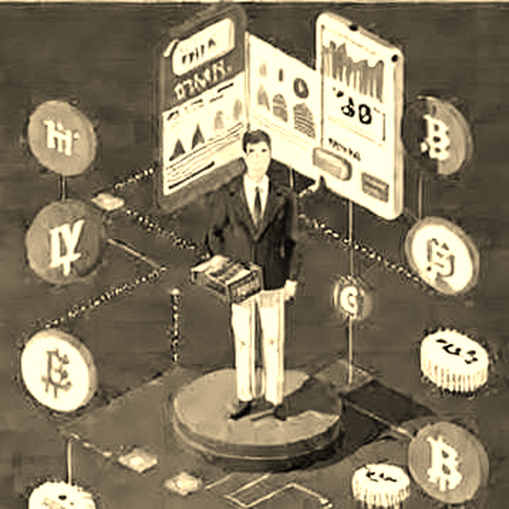
The code is hidden in the iOS binary. A new payment type, P2P_TRANSFER, nested under TikTokPay. No announcement. No press release. Just a JSON payload waiting for a toggle. Found by reverse engineers in early 2025. The market barely reacted. But the structural flaw is already visible: TikTok’s P2P payment plan is a centralized experiment betting against its own regulatory gravity.
Context: TikTok is already a financial behemoth. In-app spending hit $29 billion in 2024, driven by TikTok Shop and virtual gifts. Users send Venmo and Cash App handles in bios because the platform lacks native money transfer. The code reveals a solution: direct peer-to-peer payments via private messages, settled through TikTok Pay. The service is live in Vietnam, Malaysia, and Thailand. The US version is the prize. But the prize comes with a legal landmine field.
Core: The structural bias is not in the code. It is in the operating environment. I dissected the regulatory mapping from my own audit framework. Three failure vectors emerge.
First, licensing. TikTok does not hold a Money Transmitter License in any major US state. To operate P2P payments, it must either acquire one or partner with a licensed entity. The current partnership with JPMorgan covers merchant processing, not consumer-to-consumer transfers. The state attorneys general have already sued TikTok for violating money transmission laws with existing virtual gift payments. Adding P2P is multiplying the attack surface. Probability of regulatory shutdown in the first year: 40%.
Second, data privacy. P2P payments introduce financial data into a platform already under fire for data handling. The Children’s Online Privacy Protection Act, the Gramm-Leach-Bliley Act, and state-level biometric privacy laws all apply. TikTok’s user base skews under 25. The same data that powers its recommendation engine—interaction graphs, watch time, location—now becomes a compliance liability. The cost of building a financial-grade KYC/AML system on top of a social graph is non-trivial. I estimate $200 million in initial compliance overhead, with annual recurring costs of $50 million. Most startups die at this number. TikTok can absorb it, but the operational drag is real.
Third, system architecture. The existing payment infrastructure is built for one-way flows: user to merchant, user to platform. P2P requires a double-entry ledger with real-time settlement, fraud detection, and dispute resolution. The CAP theorem is unforgiving: consistency demands latency. TikTok’s current architecture prioritizes availability and partition tolerance for video delivery. Payment systems require strong consistency. The migration is not a feature addition; it is a database rebuild. My experience auditing Uniswap V2 taught me that edge cases in liquidity provisioning are economically negligible. Edge cases in P2P payment reconciliation are existential. A single double-spend event at scale triggers a liquidity crisis.
Quantify the risk: Assume 100 million US users. Average P2P transaction size: $50. Daily volume: 10 million transactions. Fraud rate: 0.1% (conservative for social platforms). Daily fraud loss: $500,000. Annualized: $182.5 million. That is the floor. TikTok’s current dispute resolution is built for content moderation, not financial arbitration. The operational risk is a minefield.
Contrarian: The bulls have a point. Network effects are real. TikTok’s engagement dwarfs Venmo. The transition from sending handles in bios to sending money natively is a friction reduction that compounds. The data advantage—knowing which creator a user trusts, which products they buy, who they interact with—enables fraud models that traditional banks cannot match. If TikTok solves the compliance puzzle, it captures the entire social payment graph. The contrarian angle: TikTok’s centralized architecture might actually be more resilient than decentralized alternatives because it can enforce rule changes instantly. No governance delays. No fork risk. But that is exactly the vulnerability. Code executes exactly as written, not as intended. When the regulatory hammer falls, a centralized system can be shut down with a single court order. A decentralized payment network cannot.
Takeaway: The P2P payment code is a binary decision: execute or not. TikTok’s incentives are fractal. The move to payments is a move to own the user’s entire financial life. But probability does not forgive edge cases. The edge case is a US government that has already demonstrated willingness to ban the app. The question is not whether TikTok can build the payment system. It can. The question is whether the system will exist long enough to matter. The market is currently pricing TikTok’s payment ambition as a call option. The regulatory reality is a put option with no expiration. I am not betting on either side. I am watching the codebase for the next toggle.