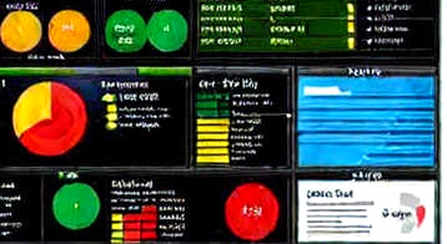
We have all seen it. A sprawling analysis report, neatly divided into nine sections, each with its own matrix of metrics, risk assessments, and competitive comparisons. The structure is flawless. The headers are precise. But when you dig into the cells, you find nothing but a single acronym: N/A. Not applicable. Information insufficient. No data.

This is the ghost that haunts our industry. A framework so perfectly designed that it can run on empty, producing a document that looks like deep research but contains zero substance. It is a mirror held up to the crypto space itself — a space that often prioritizes form over function, narrative over truth, and templated analysis over genuine understanding.
I have been in this ecosystem since the ICO era. I have seen the whitepapers that promised the moon but delivered only code that never compiled. I have watched analysts regurgitate the same talking points across a dozen different protocols, swapping out project names but keeping the paragraphs identical. The empty framework is not a bug. It is a feature. It is the logical endpoint of an industry that has become addicted to spectacle and terrified of silence.
But silence is the sound of true development. Resilience is the new utility. And if we cannot admit when we have no information, we will never build the trust that decentralized systems require.
Let me tell you a story. In 2022, a friend of mine asked me to review a research report on a new Layer 2 solution. The report was seventeen pages long. It had a table of contents, footnotes, and a color-coded risk matrix. I read it carefully. Every single technical claim was either a vague handwave or a direct copy-paste from the project's medium post. The author had never actually interacted with the testnet. They had never analyzed the sequencer's centralization risk. They had never even asked the question: "What happens if the validators collude?"
When I pointed this out, the author shrugged. "The template requires a section on security assumptions," they said. "I filled it in with what the project says. It's not my job to verify." This is the disease. We have outsourced our critical thinking to templates. We have replaced genuine analysis with a checklist. We have become comfortable with the empty cell.
From the ashes of 2022, we planted seeds for 2030. But those seeds will not grow if we water them with empty frameworks. They need the soil of real data, the sunlight of honest critique, and the water of technical depth.
I have spent the last twelve years in this industry. I have founded a Web3 community, built a personal brand around empathetic finance translation, and written hundreds of essays that try to bridge the gap between cold code and human values. I have also suffered through the bear market, watching my portfolio draw down by 85% while I wrestled with the question of whether I was just writing for likes or actually contributing something meaningful.
What I have learned is this: the most valuable analysis is not the one that fills every cell. It is the one that knows when to say "I don't know." It is the one that admits when the data is insufficient, when the risk is unquantifiable, when the narrative is just a story we tell ourselves to sleep better at night.
In the early days, when I was a 19-year-old finance student in Manila, I fell in love with the philosophy of decentralization. I read the Golem whitepaper and believed that we could create a global supercomputer owned by the people. I was naive. But I was also honest. I did not pretend to understand the technical details I had not yet learned. I asked questions. I dug into the code. I wrote essays that were messy and uncertain, but they were mine.
That is what we have lost. The courage to be uncertain. The willingness to leave a cell empty rather than fill it with a lie.
Consider the analysis framework that inspired this article. It is a beautiful structure. Nine dimensions, each with subcategories, risk matrices, and confidence levels. It is designed to produce a comprehensive report on any blockchain project. But when fed with no input, it does not collapse. It produces a perfect document full of N/A placeholders. It is a machine that can generate the appearance of analysis without any actual analysis.
This is a metaphor for the entire crypto research industry. How many reports have you read that are just a rehash of the project's own documentation, dressed up with a few market cap charts and a disclaimer? How many "deep dives" are actually just surface skims, their authors too afraid to admit they did not understand the cryptography? We have built an ecosystem of churnalism, where quantity is rewarded over quality, and where the template is the product.

Hype fades. Infrastructure remains. But infrastructure is not built by templates. It is built by engineers who test their assumptions, by analysts who stress-test their models, and by writers who are willing to say "I don't know" when they do not know.
Let me give you a concrete example. The framework's technical analysis section asks for innovation, maturity, security assumptions, and performance metrics. When the input is empty, it marks all as N/A. But what if the framework had a different default? What if it forced the analyst to write a sentence explaining why the information is missing? What if it required a timestamp for when the data was last checked? That would be a framework that respects the reader enough to admit its own limitations.
Instead, we get a blank canvas. Beautiful, but empty. The analyst can fill it with anything, or nothing, and still call it a report.
The contrarian angle here is that the empty framework is not a failure. It is a mirror. It reflects the state of our industry's information hygiene. We have so much noise, so many PR-driven announcements, so many copy-paste analyses, that we have forgotten what real information looks like. The empty framework is a protest. It is a scream. It says, "You gave me nothing, so I will give you nothing back."

But we can do better. We must do better.
I have audited DeFi protocols. I have analyzed L2 rollups. I have written about the interest rate models of Aave and Compound, and how they are completely arbitrary — disconnected from real market supply and demand. I have watched the post-Dencun blob space fill up, and I have warned that gas fees will double again within two years. I have argued that CBDCs and cryptocurrencies are fundamentally opposed: one seeks total surveillance, the other seeks privacy and freedom. They cannot coexist.
These are not empty statements. They are grounded in years of studying the technical architecture, the economic incentives, and the human values behind the code. They come from a place of genuine engagement, not from filling a template.
So here is my takeaway, and I hope you will take it to heart: the next time you read an analysis report, look at the cells. Are they filled with real data, or are they filled with platitudes? Does the author admit uncertainty, or do they pretend to know everything? A framework is only as good as the data it contains. An empty framework is not a report. It is a placeholder for a report that someone did not have the courage or the time to write.
Visionaries plant trees they never sit under. But they do not plant empty trees. They plant trees that will grow, that will bear fruit, that will provide shade. Let us be the kind of analysts who plant real trees. Let us be the kind of writers who admit when we do not know. Let us be the kind of community that rewards honesty over completeness.
From the ashes of 2022, we planted seeds for 2030. Those seeds need real soil, not empty frameworks. Let us give them the truth. Even if that truth is just a single word: "N/A." But let us say it with context, with humility, and with a commitment to find the answer.
That is the only way we will build something that lasts.