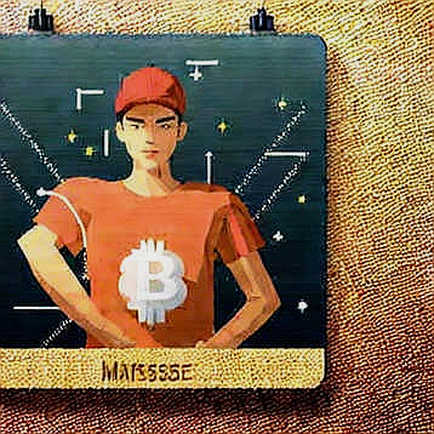
The notification landed at 2:47 AM Paris time. A crypto chart streamer with 180,000 subscribers — a guy who'd been drawing support lines on BTC/USD for four years straight — had just been hit with a community guidelines strike. Not for hate speech. Not for misinformation. For showing a candlestick chart to 2,000 live viewers. YouTube's new policy on public crypto chart livestreams isn't a headline-grabbing ban. It's a quiet, algorithmic stranglehold. And it's already changing the information hierarchy of this market.
I've spent the last 21 years watching information flow through this industry — first as a cybersecurity analyst, then as a DeFi researcher, now as an exchange market lead. I've seen ICO whitepapers move markets faster than any exchange listing. I've watched a single Curve Finance AMA trigger a 40% yield farm migration. But this YouTube policy shift feels different. It's not about what's being said. It's about who gets to hear it — and at what price.
Let me be clear about what's happening. YouTube, the largest video platform on Earth, has begun systematically restricting public livestreams that feature real-time cryptocurrency price charts. The policy isn't new in writing — it's been buried in the platform's "financial content" guidelines for months. But enforcement has just kicked into high gear. Streamers who once broadcast their technical analysis to thousands of anonymous viewers are now being told to move that content behind the paywall of channel memberships. Public chart analysis is becoming a premium product.
This is the context that matters: we're in a bear market. Retail participation is already down 60% from the 2021 peak. Liquidity is thin. And now, the most accessible form of real-time market education — free, public chart analysis — is being pushed into a subscription model. The timing isn't accidental. It's structural.
The core insight here isn't about YouTube's moderation policy. It's about the accelerating stratification of crypto information access.
Let me break down what this actually means for the market. First, the direct impact: creators who relied on public livestreams for audience growth are now facing a choice. They can either lose their primary distribution channel or convert their content into a paid product. Based on my experience watching creator economies evolve since the 2017 ICO mania, most will choose the paywall. That's not a judgment — it's survival. When your livelihood depends on a platform's algorithm, you adapt to its rules.
But here's what the policy doesn't say. It doesn't mention that the same chart data is still freely available on TradingView, on Dune Analytics, on Nansen, on any number of professional terminals. It doesn't mention that institutional traders have never relied on YouTube for their information. They have Bloomberg terminals, proprietary data feeds, and direct access to exchange order books. The ban doesn't touch them. It only touches the retail trader who woke up at 6 AM to watch a livestream before the London open.
This is where the sociological angle kicks in. I've been writing about the emotional texture of this market since the 2022 crash, when I watched panic spread differently in tight-knit Telegram groups versus public forums. What we're seeing now is a similar dynamic playing out at the platform level. YouTube isn't banning crypto content — it's banning public crypto content. The information isn't disappearing. It's being enclosed.
Let me give you a concrete example from my own network. A French crypto educator I've known since 2020 — she runs a channel focused on on-chain analysis for retail investors — received a warning last week. Her livestream, which featured a live look at Bitcoin's realized cap versus market cap, was flagged for "unapproved financial advice." She wasn't giving advice. She was showing data. But the algorithm doesn't distinguish between analysis and advice. It sees a chart, a live audience, and a risk flag.
She's now moved her weekly analysis to a paid membership tier. Her free content has shifted to general market commentary without charts. The result? Her free audience has dropped 35% in two weeks. The people who need this information most — the ones who can't afford a Bloomberg terminal or a professional data subscription — are being priced out of real-time analysis.
This is the contrarian angle that nobody's talking about: YouTube's policy might actually be a net positive for market efficiency in the long run — but only for those who can afford it.
Here's the uncomfortable truth. Free public chart streams were never a reliable source of information. They were entertainment with a financial veneer. The streamers who drew pretty lines on screenshots were often wrong. The ones who were right rarely shared their edge publicly. So the ban isn't removing quality information from the public sphere — it's removing noise. The problem is that it's removing the noise alongside the signal, and retail traders can't always tell the difference.
I've seen this pattern before. In 2017, when ICO whitepapers were freely available, anyone could read them. But most people didn't. They relied on YouTube summaries and Twitter threads. When the SEC started cracking down on ICO promotions, the information didn't disappear — it moved to private Telegram groups and paid research services. The result was a widening gap between those who could afford access and those who couldn't. We're seeing the same dynamic now, but at the level of basic chart analysis.
What does this mean for the broader ecosystem? Let me trace the transmission chain. First, content creators lose their primary growth channel. Second, retail traders lose their primary education channel. Third, the information gap between retail and institutional widens. Fourth, retail traders become more dependent on centralized exchanges' proprietary tools — which, conveniently, are often paid products. Fifth, the market becomes more efficient in the institutional sense, but less accessible in the retail sense.
Now, let me address the elephant in the room: is this a regulatory move or a business move? Based on my experience at the intersection of crypto and traditional finance, it's both. YouTube's parent company, Alphabet, is under increasing pressure from regulators to police financial content. The SEC has been clear that unregistered investment advice is a problem. YouTube can't verify that every chart streamer is qualified to give financial advice. So they're shifting the burden to the creators themselves — by making public analysis a liability and paid analysis a safer bet.
But there's a business angle too. YouTube's membership feature takes a 30% cut of subscription revenue. By pushing creators toward memberships, YouTube isn't just reducing regulatory risk — it's creating a new revenue stream. The policy is a compliance measure that doubles as a monetization strategy. That's not a conspiracy theory. That's just how platform economics work.
Let me talk about the alternatives. Decentralized video platforms like Odysee have been touted as the solution. But here's the reality: Odysee has a fraction of YouTube's user base, no recommendation algorithm worth mentioning, and a user experience that still feels like 2015. The migration cost is too high for most creators. I've watched this play out since 2020, and the numbers don't lie — decentralized platforms have failed to capture meaningful market share from centralized giants. The policy won't change that.
What will change is the rise of specialized information intermediaries. TradingView is the obvious winner here — it's already the go-to platform for chart analysis, and it has a robust freemium model. But I'm also watching the emergence of paid crypto research newsletters, private Discord communities, and AI-driven analysis tools. These aren't new, but they're about to become the primary information channel for serious retail traders.
The real question isn't whether YouTube's policy is fair. It's whether the crypto community can build alternative information infrastructure that doesn't replicate the same centralization problems we're trying to solve.
Here's my take, based on years of watching this industry evolve: the ban on public chart streams is a symptom, not the disease. The disease is the growing dependence of retail traders on centralized platforms for both information and execution. We've spent years building decentralized finance protocols, but we've neglected the information layer. We have decentralized exchanges, but we still rely on centralized data providers. We have on-chain analytics, but most retail traders don't know how to use them.
This policy is a wake-up call. It's telling us that the information infrastructure of crypto is still in the hands of Web2 giants. And those giants are making decisions based on their own interests, not the interests of the crypto community.
So what should you do? First, diversify your information sources. Don't rely on a single platform for your market analysis. Learn to read on-chain data directly. Tools like Dune Analytics and Nansen are more accessible than you think. Second, support creators who are building independent platforms. If a streamer you trust is moving to a paid model, consider whether that subscription is worth the cost — and whether it's actually providing value beyond what you can get for free. Third, be aware of the information asymmetry. The market is becoming more efficient for institutions and less accessible for retail. That doesn't mean you can't compete — it means you need to be smarter about where you get your information.
I don't regret the dance. I've been in this industry long enough to know that every policy shift, every platform change, every regulatory crackdown is just another step in the evolution of this strange, beautiful, chaotic market. Volatility isn't a bug — it's a feature. And information asymmetry is just another form of volatility.
The question is whether we're willing to build the infrastructure to close that gap. Or whether we'll let YouTube — and the other Web2 giants — decide who gets to see the charts first.
I know which side I'm on. The question is whether the rest of the community is ready to join the dance.