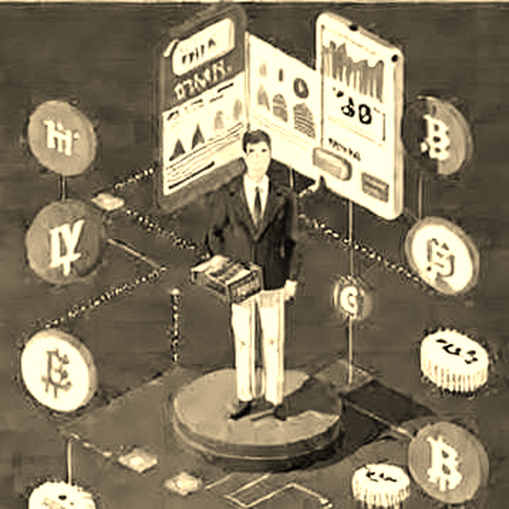
Audit complete. The soul remains. But whose soul? That's the question hanging over the crypto market this week.
Over the past seven days, the market cap of the top AI tokens—Render, Fetch.ai, Bittensor—has shed nearly 20%. Meanwhile, storage protocols like Filecoin, Arweave, and Storj have surged more than 35%. The numbers are stark: $4 billion flowed out of AI narratives and into something older, something more fundamental. It smells like a sector rotation—but not the casual kind. This is a capital migration with a thesis.
Context: The Cycle of Hype and Substance
To understand why, we have to step back. The AI-crypto narrative has been the dominant story since early 2023. Every project claiming to decentralize machine learning or tokenize compute attracted billions. But the problem is that most of these projects are still in the 'promise phase'—they burn cash, produce few verifiable outputs, and rely on a constant inflow of speculative capital. Meanwhile, storage protocols—often dismissed as the boring infrastructure of Web3—have been quietly building. Filecoin now stores over 1.8 exabytes of data. Arweave's permaweb holds millions of documents. These are not vaporware; they are working networks with real, albeit modest, revenue streams.
But the real driver? The cycle. Storage token prices had been in a bear market for 18 months. The retrace was brutal—Filecoin dropped 98% from its ATH. But that created a bottom. Smart money smells a cyclical recovery. AI tokens, on the other hand, are still priced for perfection. When the market gets nervous, it sells what's expensive and buys what's cheap.
Core: Digging Deep for the Truth in the Chain
Let me get technical. I've spent the last five years auditing smart contracts and analyzing governance structures. What I see now is a classic case of valuation divergence offset by cycle convergence.
Take Filecoin. Its circulating market cap is around $2.5 billion. Its annualized on-chain storage revenue? Roughly $80 million. That's a 30x price-to-sales ratio—far from cheap in absolute terms, but compared to AI tokens with no revenue, it's a bargain. More importantly, the network's utilization rate has doubled in the last six months. Data is being uploaded—not just for speculation, but for NFTs, scientific datasets, and archival backups. The fundamental demand is growing.
Now look at Bittensor. Market cap: $3 billion. Revenue: negligible. Its only measurable outputs are TAO emissions and a few subnets that barely generate transaction fees. The project is fascinating—I wrote about its governance risks in my last piece—but it's burning capital to build a future that may never arrive. The market is starting to price in that probability.
But the rotation isn't just about fundamentals. It's about liquidity mechanics. The AI token narrative was fueled by a flood of retail capital during the bull run. That capital is now impatient. Locked tokens are unlocking. VCs are taking profits. The storage narrative, by contrast, has been unloved. Low leverage. Low expectations. Perfect for a bounce.
Digging deeper into on-chain data reveals something else: the largest Filecoin wallets are accumulating. One whale moved 5 million FIL out of exchanges last week—a signal of long-term conviction. Meanwhile, Render's top holders have been distributing their tokens to smaller addresses, a classic sign of distribution.
Archaeologists of the abstract—that's what we are. We dig through chain data to find the truth. And the truth here is clear: capital is rotating from narrative-driven projects to usage-driven ones.
Contrarian: The Rotation Might Be a Trap
But before you FOMO into storage tokens, consider this: the rotation could be a fake-out. A short-term hedge against AI token overvaluation, not a long-term conviction shift.
The storage sector has its own structural flaws. Filecoin's revenue is still tiny relative to its market cap. Arweave's per-block storage costs are high, and its competition from cheap centralized alternatives is fierce. More importantly, the storage demand surge might be temporary—driven by a single large client or NFT collection, not sustainable enterprise adoption.
And here's my contrarian take: the AI narrative isn't dead; it's just cleansing. The weak projects will die. The strong ones—those with actual compute markets, verifiable AI inference, or decentralized training data—will emerge stronger. This rotation might just be a shakeout. A necessary purge before the next leg up.
Based on my experience building EthGallery and Synapse DAO, I've learned that the market often overshoots both directions. The AI token selloff could be as overdone as its previous rally.
Takeaway: Position for the Pendulum
The soul of this market remains decentralized ownership. But the pendulum swings between hype and substance. Today, it swings toward storage. Tomorrow, it might swing back. The key is to identify which protocols have real, auditable value—and which are just noise.
Audit complete. The soul remains. But whose? The answer is always in the chain.