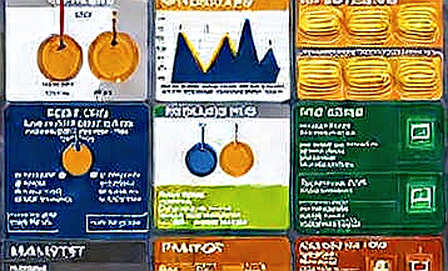
In a market drowning in memecoins, AI-agent tokens, and leveraged point farming, the launch of a data visualization tool rarely moves the needle. But that is precisely why DeFi Development Corp.'s new 'State of Solana' dashboard deserves a closer look. While the crowd chases the next 100x, the infrastructure that enables institutional capital to sleep at night is being laid quietly. This dashboard is not a trade. It is a signal—a signal about who is building the on-ramps for the only capital that matters: patient, risk-averse, traditional finance.
Let me be clear from the start. As someone who has spent years auditing smart contracts and dissecting protocol fragility, I have learned to be skeptical of press releases. Most 'ecosystem tools' are vanity projects destined for the digital graveyard. However, the strategic implication of an official network health tracker for Solana cannot be dismissed as mere noise. It is a calculated move to solve a problem I have witnessed firsthand since 2020: the inability of sophisticated investors to verify the reliability of a high-throughput chain that has a history of public stumbles.
For context, Solana has always been the 'fast car' of Layer 1s. Its theoretical throughput of 65,000 TPS is a marvel of engineering, but the narrative has often been overshadowed by network congestion and outage concerns. Traditional financial institutions, the very entities the ecosystem needs to mature, do not trade on narrative. They trade on verifiable uptime, deterministic finality, and transparent operational metrics. Until now, accessing this data required cobbling together information from block explorers like Solana Beach, general-purpose analytics from Dune, or expensive proprietary feeds from Nansen. There was no single, authoritative source of truth. This fragmentation creates friction, and friction is the enemy of institutional adoption.
DeFi Development Corp. appears to be targeting this friction directly. The core value proposition is not revolutionary technology—it is revolutionary trust. By providing a real-time dashboard focused specifically on network health, they are attempting to standardize how the market perceives Solana's operational status. This is a play for the 'Oracle of Truth' position within the ecosystem, a role that carries immense influence over future capital flows.
Let me dissect the technical realities here, because my 2017 experience auditing 50,000 lines of Solidity code taught me that the devil is always in the details. The dashboard is not a smart contract; it is a read-only interface, likely aggregating data from RPC nodes and validator metrics. Its security model is therefore simpler, but its reliability is entirely dependent on the integrity of its data sources. A dashboard is only as good as its indexer. The critical question is: does DeFi Development Corp. have access to privileged data? If they are pulling internal metrics from the Solana Foundation or a consortium of top validators—such as vote participation rates, proposal delays, or stake concentration—then they possess a data moat that Dune Analytics cannot easily replicate. Dune relies on community-submitted queries on public blockchain data. It is powerful, but it lacks the granular, real-time node-level telemetry that an official or semi-official tool might access.
During the DeFi Summer of 2020, I identified a $45,000 arbitrage opportunity between Curve and Uniswap. That trade was successful because I understood the specific mechanics of each protocol. But in my subsequent blog post, I focused on the fragility of pegged assets. That experience taught me that protocol interconnectivity creates systemic risk. Here, the systemic risk is different. The failure of a dashboard is not a hack; it is a failure of perception. If the State of Solana dashboard displays inaccurate latency data, it could trigger a false narrative about network instability, causing more harm than good. The accuracy of this tool is not a technical feature; it is a financial liability. They need to be flawless, and they need to be transparent about their data refresh rates. A dashboard that lags by five minutes is useless for high-frequency trading decisions, but it might still be valuable for a fund manager conducting quarterly due diligence. The key is setting the correct expectations for the target audience.
The market impact, as my analysis suggests, is minimal for SOL's price in the short term. This is not a demand-side catalyst. It does not increase TVL or generate fees. However, to dismiss it as unimportant is to misunderstand the nature of institutional adoption. When I advised my community to hedge into stablecoins in 2022, I did so based on a 'Red Flag Checklist' that included token emission schedules and treasury transparency. Institutions have a similar checklist, but theirs is more demanding. They need to answer to their LPs: 'Why Solana?' A tool like this provides the empirical justification. It allows a fund manager to present a slide showing Solana's 99.98% uptime over the past 90 days, verified by a dedicated monitoring dashboard. That is not a trivial feature. That is a sales tool for the entire ecosystem.
Now, let us engage in some contrarian thinking. The most obvious criticism is that this is a low-value 'digital billboard' with no real utility. I initially leaned toward this view, rating its technical value at one star. But consider this: the biggest threat to a dashboard is not competition from Dune; it is the possibility that it becomes a target for manipulation. Imagine a sophisticated attacker compromising the dashboard's API to falsely report a network halt. The subsequent panic selling on leveraged positions could be devastating. This tool, while designed to build trust, could become a single point of failure for market sentiment. Therefore, the security of the dashboard's backend infrastructure is paramount. It must be treated with the same rigor as a custody solution, even though it does not hold funds. This is a blind spot many analysts will miss.
Another contrarian angle: the success of this dashboard might be a leading indicator of a narrative shift. For years, the 'Ethereum Killer' narrative has dominated discussions. But Ethereum is not the target here. The target is TradFi. By building tools that speak the language of traditional finance—compliance, reliability, transparency—DeFi Development Corp. is signaling that Solana's growth strategy has moved beyond retail speculation. The focus is on capturing the 'slow money.' This is a long-term play that will pay dividends in the form of institutional partnerships and tokenized real-world assets settling on-chain. The dashboard is the foundation layer for a more mature financial ecosystem on Solana. It is the boring, necessary plumbing that nobody sees but everyone relies upon.
The question of team credibility remains a shadow. DeFi Development Corp. is not a household name. There is no known venture capital backing, and the team is largely anonymous. In a market scarred by scams, this is a yellow flag. However, the absence of a token launch is a strong positive signal. They are not building a dashboard to pump a coin; they are building it to establish a reputation. It is a lead generation tool for their consulting or data services. This suggests a level of long-term thinking that is rare in a market obsessed with quarterly unlocks.
Furthermore, we must consider the regulatory angle. In the United States, where the SEC is cracking down on unregistered securities, a data dashboard is a safe harbor. It is not a security. It does not generate yield. It is a tool. By operating in this 'sovereign' space, DeFi Development Corp. avoids the legal quagmire that ensnares so many other projects. This is a smart, hedged position. They are building a business that is resilient to regulatory changes. In my governance work, I often preach the importance of systemic fairness. This project, by virtue of its neutrality, embodies that principle. It is a public good that is privately operated.
Looking ahead, the true test will be in the data refresh frequency and the inclusion of unique metrics. If DeFi Development Corp. can partner with the Solana Foundation to become the official source for validator performance data, their moat will widen significantly. If they can provide sub-second finality stats, they will become the default go-to for algorithmic traders. But if they stagnate, they will be forgotten. The cost of failure is low, but the opportunity cost for the Solana ecosystem is high. We need better tools, not more tokens.
In a world of noise, code is the only quiet truth. This dashboard is a step toward making that truth more accessible. It is not a revolutionary protocol, but a necessary one. The market may yawn, but the institutional wallets are watching. The question is whether DeFi Development Corp. can execute on this promise of clarity. If they do, they will have built more than a dashboard; they will have built a gateway. And in a sideways market, positioning is everything.