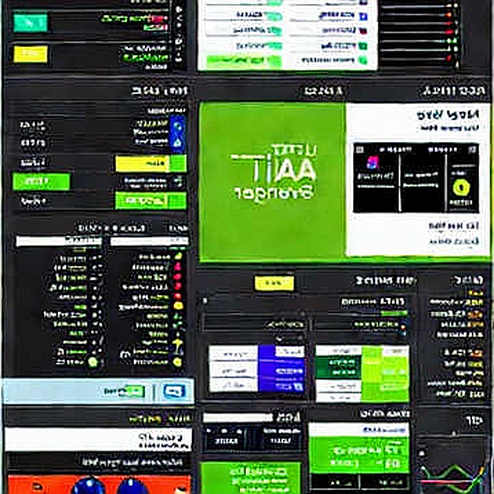
A single number floats across the screen: 45.5%. That is the probability—priced by a prediction market—that the Iran blockade will end before August 31, 2026. The US has signaled openness to talks. The market whispers caution. But anyone who has spent years auditing cryptographic protocols knows a dangerous truth: that number is not a signal. It is a symptom.
Let me be direct. I have spent over a decade in cryptography, and later as a DAO governance architect in Paris. I have watched prediction markets rise from niche experiments to billion-dollar hype machines. In this bull market, every headline feeds the narrative that these platforms are “truth machines”—decentralized sources of collective wisdom. But the 45.5% you see? It could be a mirage shaped by thin liquidity, a vulnerable oracle, or a regulatory trap. The real question is not what the market says, but who controls the machinery beneath it.
To understand the risk, you must first see the architecture. A prediction market like Polymarket operates on a blockchain—typically Polygon in this case—using smart contracts to match buyers and sellers. Users buy YES or NO tokens that pay out $1 if the event resolves according to a predefined condition. The price of the token becomes the implied probability. In theory, it is elegant. In practice, the entire system rests on a single fragile element: the oracle.
The oracle is the bridge between the blockchain and the real world. For the Iran blockade market, someone—a decentralized group, a multisig, or even a single entity—must attest to the outcome. If that oracle is corrupted, manipulated, or simply slow, the market becomes a casino with rigged dice. Based on my audit experience with over 50 DAO projects, I have seen this failure mode again and again. One project’s “decentralized” oracle turned out to be a single server in a basement. Another used a reputation system so opaque that the validators never revealed their identities. Prediction markets inherit the centralization they claim to have left behind.
Now consider the liquidity. The 45.5% number may be the average price of the last few trades, but if the total volume on that market is a few thousand dollars, a single whale can swing the probability by 10% or more. In the 2022 bear market, I saw prediction markets on minor events trade at absurd odds because no one was watching. This is not collective intelligence; it is collective indifference dressed in math. Code is law, but people are the soul. And when people are absent, the code just echoes emptiness.
The regulatory angle adds another layer. The US has a long history of cracking down on event-based contracts that resemble gambling. The CFTC’s 2024 settlement with Polymarket was a warning shot. Now, a market tied to Iranian sanctions—a matter of national security—sits in plain sight. If the SEC or CFTC decides this market falls under the Howey Test as an investment contract, the platform could freeze trading, leaving holders of YES tokens stranded. I am not a lawyer, but I have been in enough governance debates to know: Don't govern the exit, govern the entrance. The risk is not just that you lose money; it is that the system you trusted disappears.
But the contrarian angle cuts deeper. The crypto community loves to celebrate prediction markets as the ultimate application of decentralized truth. They point to the 2020 election markets or the Super Bowl odds as successes. Yet every time a market resolves, someone cries foul. The oracles are often a small committee, the dispute resolution is slow, and the final answer may come from a centralized source like a news wire. We are not decentralizing truth; we are technologizing the same old gatekeepers. The real innovation would be a market where the oracle itself is governed by a DAO of stakeholders, where the rules for resolution are audited by an independent council, and where the exit (the payout) is secured by predictable code. That is not what we have today.
During the height of DeFi Summer, I ran a DAO literacy workshop in Paris. One of the exercises we did was to simulate a prediction market on a simple event: “Will the price of ETH reach $10k by December 2021?” The YES token traded at 60%. But when we opened the floor to discuss the oracle, the participants realized they had no idea who would verify the price. They assumed “the market” would do it. That moment of cognitive dissonance is what I call the oracle blind spot. We love the outcome, but we ignore the mechanism that delivers it.
So what does the 45.5% actually tell us? It tells us that a small group of traders, with their own biases and risk appetites, have placed bets that sum to a number. It does not tell us whether the US will actually negotiate. It does not tell us if the blockade will hold. It tells us only that somewhere, a set of smart contracts are waiting for a human to press a button and declare the truth. Until we build systems where the button is pressed by a verifiable, decentralized consensus—where the oracle is as robust as the settlement layer—these numbers are entertainment, not intelligence.
The path forward is not to abandon prediction markets. It is to demand transparency in their governance. When you see a probability, ask: Who resolves this? How are they chosen? Can I audit their incentives? The same principles apply to every DeFi protocol, every DAO, every token. Don't govern the exit, govern the entrance. The entrance is the oracle. The entrance is the governance model. The entrance is the community that decides what is true.
At 43, I no longer believe that code alone can save us. I believe that code, when paired with ethical design and community accountability, can build resilience. The Iran blockade market may resolve correctly, or it may become another cautionary tale. Either way, the lesson is already written: prediction markets are not truth machines—they are coordination machines. What you do with that coordination is up to you. Build wisely.