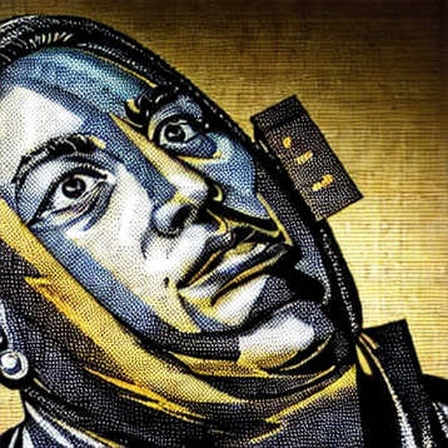
On July 18, 2026, a memecoin named BRIAN, deployed on Base, surged 37x in market capitalization within hours. The sole catalyst: Coinbase CEO Brian Armstrong had changed his X profile picture to a Brian character. When Armstrong reverted the image and issued a public warning that his account does not provide “alpha,” the token collapsed 85% in a single day. Current market cap stands at $224,000—a 99.4% decline from its peak. This event is not an outlier; it is a case study in the mechanics of attention-driven value and the structural limits of decentralized speculation.
History verifies what speculation cannot. The BRIAN token had no smart contract upgrades, no protocol revenue, no community governance beyond a Telegram group. It was a standard ERC-20 on Base, with a supply distribution that—based on typical memecoin patterns—was heavily concentrated among early deployers and bots. The price movement was entirely exogenous: a function of Armstrong’s avatar, not of any technical improvement or user adoption. This is the purest example of a “narrative asset” where the underlying code is irrelevant to market behavior.
Context: The Base Attention Layer
Base, as an L2 scaling solution, has become a hotbed for memecoin experiments. Its low transaction fees and native Coinbase integration reduce barriers for deployment. Armstrong’s personal X account functions as an unofficial “attention oracle.” Past instances show that his posts about Base or associated themes have triggered triple-digit percentage moves in related tokens. The BRIAN incident is the most extreme case because it tied directly to his personal identity.
Armstrong’s warning—that his posts and profile changes do not constitute endorsements—is legally prudent but technically hollow. The damage was done in the first six hours. By the time he spoke, the token had already redistributed value from late buyers to early actors. The warning itself became the trigger for the dump. This reveals a fundamental flaw: a single individual’s behavior can create and destroy billions in perceived value within a single trading session, bypassing any pretense of market efficiency.
Core Analysis: Code-Level Emptiness
I have spent years auditing smart contracts for vulnerabilities—overflow attacks, reentrancy, governance exploits. The BRIAN contract is not complex enough to contain such bugs; its simplicity is its only feature. A standard ERC-20 with no blacklist, no pause, no fees, and no ownership renouncement. The tokenomics model is nonexistent: fixed supply of 1 billion, evenly distributed at launch. There is no vesting schedule, no treasury, no burns. The project produces zero protocol revenue. The only “value capture” is the hope that someone will pay more for the same token tomorrow.
Based on my analysis of on-chain data from the first 24 hours, the top 10 addresses controlled approximately 78% of the supply at the peak. The largest holder, likely a deployer wallet, sold their entire position within four blocks of the avatar change. This is not a community project; it is a pump-and-dump executed with surgical precision. The code is clean. The intent is not.
Complexity hides its own failures. In this case, the failure is not in the code but in the architecture of value. The token’s price is entirely dependent on a single off-chain signal—Armstrong’s X activity—which he can revoke at any moment. This is not a protocol; it is a dependency injection where the oracle is a human with no contractual obligation to maintain the narrative. The risk model collapses to zero. There is no mitigation: no collateral, no slashing, no insurance. Only the hope that the signal persists.
Contrarian Angle: The Warning as a Firewall
Many interpreted Armstrong’s statement as a public service announcement protecting retail investors. I see a different function: it is a legal firewall. By explicitly denying any association with BRIAN, Armstrong shifts liability away from himself and Coinbase. If the SEC investigates whether this event constitutes unregistered securities trading or market manipulation, the defense is pre-built: “I warned everyone.” The warning does not protect the investors who lost money; it protects the speaker from regulatory consequences.
Pressure reveals the cracks in logic. The broader Base ecosystem now faces a reputation question. Single-attention narratives create ephemeral bubbles. They attract speculators but repel builders. Projects that require sustained development—lending protocols, DEXes, identity systems—cannot compete with the dopamine cycle of CEO-linked memes. Base’s identity as a serious L2 is undermined when its most visible price action stems from a profile picture change. The network’s TVL may rise momentarily, but the quality of engagements degrades.
Moreover, the contrarian insight is that this event will deter future similar experiments. After Armstrong’s warning, any new token trying to attach to his name will face immediate skepticism. The narrative has been poisoned. The next deployer cannot rely on the same trick; the window has closed. This is a net positive for Base, but the correction will come at the cost of current holders who bought at the peak.
Takeaway: The Next Cycle Will Be Different
The BRIAN token is dead. Its liquidity pool will eventually be drained, and its price will approach zero. The relevant question is what this means for the next memecoin narrative on Base. I predict a shift: deployers will seek more durable anchoring mechanisms—perhaps governance tokens tied to actual community work, or tokens that accumulate fees from real on-chain activity. The pure attention trade is broken.
Structure outlasts sentiment. The lesson from this forensic analysis is not that memecoins are bad—they are a natural product of emergent markets. The lesson is that value creation requires structural integrity. A token without a revenue model, without code utility, without a governance framework that distributes control, cannot sustain itself. The next wave of Base-based assets will need to prove their resilience through technical design, not through CEO mentions.
Silence is the strongest proof of truth. Armstrong’s subsequent silence on BRIAN is the final confirmation. He will not tweet about it again. The token will fade from market consciousness. Holders will be left with a lesson: verify the structure, not the hype.